

April 14, 2026These Keynote Speakers Prove Innovation is a Habit, Not a Big Idea [2026 Guide]
Our 2026 list of innovation keynote speakers that reveal why real innovation is a repeatable habit, not a big idea, and why marketing is the proof.
What if the best innovation keynote speakers are right, and the big reveal you’ve been waiting for is never coming?
Most organizations treat innovation like a summit: you plan the climb, you reach the top, you declare victory. But the brands that are actually winning right now, the ones customers choose again and again without needing to be reminded, are doing something quieter and far more durable. They’ve built innovation into the rhythm of how they operate. It’s not a campaign. It’s not a launch. It’s what they do on an ordinary Tuesday when no one is watching.
There’s a reason the most admired companies rarely announce themselves. They don’t need to. Their customers do it for them. The trust gets built one interaction at a time, one small improvement at a time, until the reputation precedes the marketing. That’s not luck. That’s a system. And the speakers, frameworks, and ideas I’m sharing today are all built around that same understanding: innovation as practice, not event.
In this newsletter, I want to break down what that looks like in practice, introduce you to some of the sharpest voices thinking about innovation and marketing strategy right now, and give you a simple framework you can run with before the month is out.
Innovation Keynote Speakers and the Brands That Actually Get It
If you want to see what innovation really looks like, don’t look at the ads. Look at what people do without being reminded.
Costco is the quiet miracle of trust. People pay to shop there, and they keep paying, because the promise feels consistent: value, fairness, and an experience that doesn’t insult your intelligence. Yes, the treasure hunt is fun. But the deeper win is reliability. Customers believe they’ll be treated well. That belief was built over thousands of repetitions, not a single breakthrough moment.
Netflix is the evolution of a habit. It didn’t just give us content. It changed the default behavior, then kept refining the system so it got easier to say yes than to say no. Less friction, better recommendations, constant iteration. The product is never done. There’s always a small improvement quietly shipping in the background.
Duolingo is the modern lesson in attention. It didn’t buy its way into your brain. It made itself memorable. The owl, the voice, the tone. Tiny cues that turn a product into a relationship, especially inside a feed full of sameness. Duolingo understood that showing up consistently, with a recognizable personality, is itself a form of innovation.
Three different industries. Same playbook. Innovation is what you do repeatedly. Marketing is the story your customers repeat.
That distinction matters more than most leaders realize. You can engineer a brilliant campaign. You can win a news cycle. But if the underlying experience doesn’t hold up to repetition, marketing becomes expensive because it has to do more work each time. The brands that spend less on acquisition are almost always the ones where the product itself does the convincing.
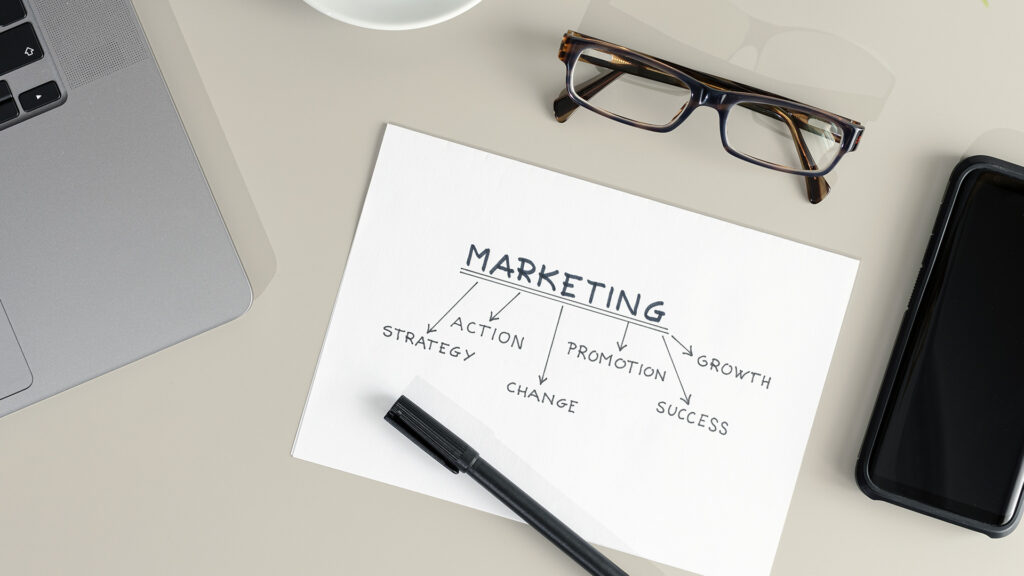
Why the Innovation Conversation Has Shifted in 2026
We are living inside a content surplus. Artificial intelligence can generate a thousand ads, emails, landing pages, and strategic frameworks before lunch. Output is no longer the constraint. What’s actually scarce now is something much harder to manufacture.
Taste: the judgment to know what’s worth making in the first place. Trust: the track record of keeping promises when no one is checking. Service: the operational discipline that turns a first-time customer into a repeat customer. And distinctiveness: the ability to be recognizable without being loud.
The business innovation conversation has shifted accordingly. The question on every leadership team’s agenda used to be: what’s our next big idea? That’s no longer the most useful question. The more useful question is: what’s the experience we’re known for, and how do we make it easier for someone to choose us again?
That’s a different kind of pressure. It requires different disciplines. And it requires a different kind of thinking about what leadership is actually responsible for.
When AI flattens the cost of content creation, the human layer, the judgment, the relationship, the consistency become the differentiator. The organizations that understand this are investing less in output volume and more in the quality of the interaction itself. They’re asking how to make the next touchpoint feel more considered, more reliable, more worth returning to.
Consider what that means practically. A company that sends 10 emails a week used to have a production advantage. Now any competitor can match that volume overnight. The production advantage has disappeared. What hasn’t disappeared is the advantage of knowing your customer well enough that each message feels relevant, specific, and timely. That’s a relationship advantage. It compounds over time and it can’t be copied by running the same AI prompt.
That is the innovation agenda for 2026. And it’s not coming from a lab. It’s coming from a commitment to doing ordinary things extraordinarily consistently.
Scott Galloway: The Innovation Keynote Speaker Who Makes Strategy Feel Like Reality
If you’ve ever listened to Scott Galloway for five minutes, you know the energy: smart, fast, and completely unfiltered. He’s a rare combination of academic rigor and street-level business instincts, and he brings both to the stage without apology.
What makes Scott compelling is that he teaches strategy the way gravity teaches physics: not as preference, but as reality. He’s not telling you what you might want to hear. He’s telling you what the data says, what the market rewards, and where the bodies are buried when companies get it wrong.
He is relentlessly focused on three questions: where is attention moving, where is money moving, and what do customers actually reward? Those three questions, answered honestly, will tell you more about your competitive position than any internal strategy document.
He also connects the dots between artificial intelligence, platforms, consumer behavior, and corporate strategy without drowning the room in jargon. That’s genuinely rare. Most people who understand the technology can’t explain it to a non-technical audience. Scott can, and he does it with wit that keeps a room leaning forward.
His core teachings are worth unpacking. First: distribution is strategy. If people can’t find you, it doesn’t matter how good you are. Discoverability isn’t a marketing problem; it’s a business model problem. Second: brand is amortized trust. You either earn it slowly through consistent behavior, or you pay for it forever through acquisition costs. Third: loyalty is the new marketing. Customer experience is no longer the “nice” department. It’s the growth department.
Scott’s superpower is making a room look at their business with fresh eyes and then giving them language for the tradeoffs they’ve been avoiding. He’s best suited for leadership conferences, marketing strategy sessions, innovation summits, and executive audiences who want candor and clarity, without any filler.
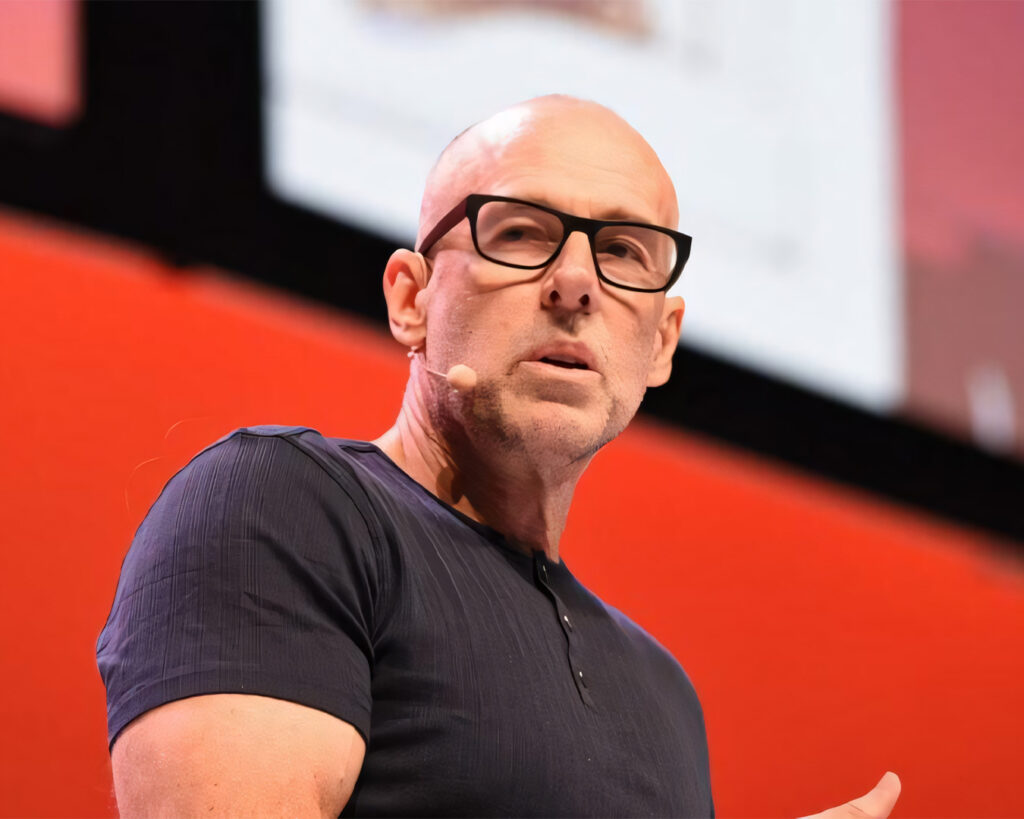
Josh Linkner: Innovation That Actually Ships
Here’s a pattern I’ve noticed across organizations: the teams that struggle most with innovation are rarely short on ideas. They’re short on execution. They’ve been conditioned to think that innovation means disruption, and disruption feels dangerous, so they wait. They wait for the perfect window, the right budget, the CEO sign-off, the strategic planning cycle. And while they’re waiting, the market keeps moving.
Josh Linkner is the antidote to that pattern. He calls it innovation theater: the workshops, the sticky notes, the offsite brainstorms that feel productive but produce nothing that ships. His alternative is micro-innovation: small, consistent improvements that compound into big results over time.
He’s great at making creativity feel safe and repeatable, which turns out to be the harder problem. Most organizations don’t lack creative individuals. They lack the cultural infrastructure that makes creativity a normal part of the work week rather than a special event. Josh builds that infrastructure in the room.
What shifts when he’s done: innovation stops being something you schedule and starts being something you practice. Teams leave with specific habits, not just inspiration.
He’s best for organizations that want more ideas without chaos, and more execution without bureaucracy. If your team keeps saying “we should do something innovative” but nothing changes quarter over quarter, Josh is the speaker to book.
Bruce Turkel: Brand Clarity That People Actually Remember
There’s a version of branding that sounds like this: we deliver high-quality solutions for a diverse set of stakeholders across multiple verticals. This sentence is everywhere. It means nothing. It describes every company and no company simultaneously.
Bruce Turkel has made a career out of helping leaders see why this kind of language is a strategic failure, not just a communication problem. Being generic, he argues, is a decision. It just happens to be a terrible one.
He’s a master of distinctiveness: helping brands articulate not what they do, but what it means to a customer to work with them. That gap, between features and meaning, is where most marketing budgets go to die. Teams spend enormous resources explaining capabilities that customers didn’t ask about, while saying almost nothing about the experience of choosing them.
Bruce is especially useful when a leadership team is stuck describing products instead of promising outcomes. He helps people start communicating why customers should care rather than why the company thinks it’s impressive.
What shifts in the room: the conversation moves from internal pride to external relevance. Teams stop optimizing their language for internal approval and start optimizing it for customer recognition.
He’s best for leadership teams, associations, and brands trying to sharpen positioning in crowded categories where differentiation has eroded.
Denise Lee Yohn: When Brand Becomes Business Strategy
One of the most persistent misunderstandings in business is the idea that brand is a marketing function. It lives in the communications team. It shows up in the logo. It gets managed during a rebrand. Then the rest of the organization goes back to operating however it operates.
Denise Lee Yohn’s work demolishes that assumption. Her central argument is that brand and culture are not separate systems; they are the same system seen from two different angles. She connects brand, culture, and customer experience as one integrated whole, and she makes the case that any gap between them is a business risk, not just a messaging problem.
If the external promise and the internal reality don’t align, customers feel it. Employees feel it. And the marketing budget has to work harder to compensate for the trust gap. Acquisition costs rise. Retention drops. The advertising gets louder because the experience isn’t doing the work on its own.
Denise gives leaders the framework to close that gap operationally: not through a rebrand, but through behavioral alignment. What does it actually look like when the brand promise is built into hiring, onboarding, service design, and daily decisions?
What shifts after she speaks: brand stops being an aspiration and becomes an operating standard. Teams understand that every internal decision is a brand decision, whether or not anyone calls it that.
She’s best for customer experience initiatives, culture and brand alignment work, and organizations that have grown tired of silos.
Torsten Gross: Building Differentiation From What’s Already True
There’s a version of strategic planning that could be summarized as: we’ll execute this once we have more resources. More budget, more headcount, more time, better market conditions. The constraints are framed as reasons to wait.
Torsten Gross teaches something most strategy frameworks ignore: constraints are not obstacles to innovation; they are design inputs. Every meaningful constraint, whether it’s time, budget, talent, competitive position, or customer expectation, contains information about where differentiation is actually possible.
He’s great at helping teams stop waiting for perfect conditions and start building differentiation from what’s already in front of them. The question isn’t what we would do if we had unlimited resources. The question is: what is uniquely possible given who we are, what we have, and where we stand right now?
That reframe changes everything. Teams that were stuck in “someday” thinking start finding traction in the present. Innovation stops requiring a budget approval and starts requiring a decision.
He’s best for strategy sessions, innovation programs, and teams navigating change with limited resources. If your people are smart but stalled, Torsten is the right voice in the room.
More Voices Worth Knowing for the Right Stage
If you’re building an innovation and marketing strategy track for your next event, a few more speakers pair particularly well with the names above.
Sheri Jacobs is sharp on innovation and organizational change capacity, especially for associations navigating disruption.
Michael Solomon works at the intersection of consumer behavior and brand psychology: why people buy what they buy, and what actually makes them come back.
Jon Youshaei brings a clear-eyed perspective on the creator economy and how trust gets built in a world where audiences control the relationship.
Melina Palmer works in behavioral economics and the real psychology behind decisions, including why rational arguments often lose to emotional defaults.
And Harry Broadman adds global strategic context: what growth actually looks like when you factor in geopolitics, trade dynamics, and the realities of operating across markets.
Each of them adds a distinct dimension. Together, they can build a program that moves an audience from insight to action across a full day.
The 30-Day Loyalty Sprint: A Framework for Right Now
Most marketing plans are built around one objective: create attention. Get seen. Drive traffic. Generate leads. That’s not wrong, but it’s incomplete.
Here’s a better goal for the next 30 days: earn a repeat.
Run what I’d call a Loyalty Sprint. It’s not a campaign. It’s a commitment to one specific customer experience improvement, executed consistently for 30 days and measured honestly at the end.
Pick one promise you can keep every single time: speed, clarity, simplicity, care, or responsiveness. Not a vague cultural value, but a specific, observable behavior that customers can feel. Remove one friction point that your customers encounter consistently: the slow handoff, the confusing process, the delay, the form that never needed to exist. Add one human moment that makes the experience feel considered: a proactive update, a follow-up that’s specific and useful, an acknowledgment that someone’s time matters.
Then measure exactly one thing: did it get easier for someone to choose you again?
That last question is deceptively hard to answer honestly. Most organizations measure acquisition metrics far more carefully than they measure the conditions that make acquisition unnecessary. They know their cost per lead down to the penny and often can’t tell you how many customers came back without being asked. The Loyalty Sprint forces the attention in the right direction.
Because in 2026, innovation isn’t the big reveal. It’s the small improvements that customers can feel, repeated until they become your reputation. That’s the standard the best brands have always held themselves to. And in a world where AI can replicate output at scale, the human discipline of showing up consistently is the one advantage that can’t be automated away.
The speakers I’ve highlighted in this newsletter are thinking about exactly this. They’re not selling disruption mythology. They’re teaching the habits, the language, the systems, and the discipline that make innovation stick. And that’s the kind of thinking your next event deserves.
Delivering impact (by design),
Seth
🎯 Got a conference or leadership day focused on growth and strategy? Schedule a quick call, and let’s match you with the right speaker.
📩 Not ready to call yet? Start here: info@thekeynotecurators.com
Want fresh ideas on business and marketing every week? Subscribe to our newsletter and stay in the loop.
Discover More Insights




Get in TouchContact US
Fill out the form so we can best understand your needs.
A representative from The Keynote Curators will reach out to you.
Our Services
Keynote Speakers Topics
© 2026 The Keynote Curators. All Rights Reserved | Terms and Conditions
The Keynote Curators, 8275 South Eastern Avenue, Suite 200, Las Vegas, NV 89123
Local (310) 299-4595 | Toll Free (888) 585-8715 | info@thekeynotecurators.com
The Keynote Curators - Top Keynote Agency, USA.